Showing posts with label Arthouse. Show all posts

Saturday, January 14, 2012

Inner apocalypse and preteniousness // Melancholia


Melancholia is split into two parts titled with the names of the two protagonists, 'Justine' and 'Claire'. Justine is played by Kirsten Dunst, Claire by Charlotte Gainsbourg. Justine is depression, Claire is anxiety.

When the threat of Melancholia (an approaching planet that once hid behind the sun and may or may not collide with Earth) heightens, Justine reacts to the situation with interminable indifference while Claire responds with suffocating anxiety. 

Von Trier uses an impending apocalypse as a way to explain what depression and an anxiety disorder really feels like. Personally, I've had bouts of anxiety attacks and moments of depression and still continue to experience these. Despite referrals to therapists, I've put off seeing them (yes, I'm in THAT stage). I haven't come across a film that accurately portrays what anxiety and depression does to a person's internal and emotional state.

That intense suffocating feeling that Claire experiences during Melancholia's approach towards Earth, as if gravity itself is trying to wring the air out of your lungs, is a mental and emotional trauma that is painfully familiar for me.

Justine's persistent and frightening indifference towards the end of the world, as well as her own wedding is depicted by Kirsten Dunst in the most powerful and believable way. The hollowness of the eyes that seem to be staring at nothing and everything. The darkness that can cloud over you at any moment and the recklessness and impulsive behaviours that come about in a desperate search to keep the dark clouds at bay. The frank cruelty towards other people that seem to come out of nowhere. The mood swings. The excessive introspection that leads you to the point of self-loathing and the consequent detachment from friends and loved ones. All of these are conveyed so brilliantly and accurately in this film. 

Some found the film to be too lengthy and others deemed it as dull arthouse trash. I can see why some people would perceive it this way. If the film was constructed in the same way but instead focused on a different subject matter altogether and if the characters did not have depression or anxiety I would have probably found it very dull as well. But since the film deeply affected me in a very personal way, I did not mind its length or its slow pacing. In fact I much preferred it that way since it gave me time to assess what I just saw. 

Some found some scenes gratuitous, like an ultra slow motion shot of a horse collapsing to the ground, but I argue that these seemingly random images are not just there because of their visual beauty but are there to reinforce a certain kind of mood. Von Trier created an atmosphere to represent what it would probably feel like if the entire planet knew and are restlessly waiting for the end of everything - a combination of hushed hopelessness and violent tremors of our defeated planet. The ground shaking music of Wagner as the tremors and the isolated country house as the collective hush of our planet. 

Again, I can fully understand why people would dislike this film because of the mood, or its length or because of its dreary subject matter. What I don't understand are the people who call the film pretentious.

Pretentious is a word used to describe this film in many reviews I've read. In all honesty, I'm quite irritated having this adjective used as a go-to word to sneer at creative works that strive to be ambitious, daring or beautiful. I find it sad when writers, specifically critics, use this word. It is cop-out criticism. It is lazy because it is too definitive and delimits the opportunity for further discussion which is what art, and subsequently, criticism is really there to do - promote discussion. 

Any work of art that is brave, unconventional and new can be called pretentious and those that who do can get away with it. This is because films like Melancholia require a certain degree of pretentiousness. Any work that takes a risk need to be christened with self-importance that it initially does not deserve. If this wasn't so then the artist will never have the impetus that eventually leads to the art's creation.

What is creativity but considering what is in one's head important enough that the artist indulges himself by bringing it into the world. If artists did not give their work greater importance than what it deserves then we will only be left with art that is subpar, lacklustre and dangerously unambitious. 

I'm just grateful that von Trier was pretentious enough that he was able to make this film. 


Images are edited by me from various screenshots from the film. Note: The film is not black and white.


Sunday, September 4, 2011

Instagram: Film Memories #2

Instagram: Film Memories are a series of posts showcasing great films I saw during a certain time period. Includes a super short, two line recap (like a haiku, but not really) and a screenshot of the film taken via Instagram.

Films I saw from 16 Aug 11 - 1 Sep 11


Breaking The Waves
A film by Lars Von Trier

Husband left paralysed after an accident.
Tells troubled wife to sleep with other men.


The Son
A film by Luc and Jean-Pierre Dardenne

Carpentry teacher nervous and not willing to teach a boy.
Not telling you why.


L'Avventura
A film by Michaelangelo Antonioni

Girl disappears after a boating trip.
Her lover and best friend fall in love.


Grizzly Man
A film by Werner Herzog

Bear-lover gets close and develops "friendships" with wild bears.
Not a good idea.


Vampyr
A film by Carl Theodore Dreyer

Guy checks into an inn.
Weird things start happening.


Written on the Wind
A film by Douglas Sirk

Alcoholic guy marries a girl, but his best friend loves her too.
Alcoholic guy's sister is in love with her brother's best friend.


Bicycle Thieves
A film by Vittorio De Sica

Someone steals a guy's bicycle who needs it to do his job.
Searches for the thief with his son.


The Night of the Hunter
A film by Charles Laughton

Children hide money for their imprisoned dad.
Guy tries to take it away from them.


Images cannot be reused without permission

Friday, August 26, 2011

The nightmare we wish we had


Vampyr (1932)
Dir. Carl Theodore Dreyer
Starring: Julian West, Maurice Shutz and Rena Mandel

Vampyr is Carl Theodore Dreyer's first sound film but it might as well be called a silent film since, like most of Dreyer's work, dialogue is kept to a minimum. In fact, the music takes over and envelopes the entire picture and transports us into one of the most unsettling and surreal realisation of a nightmare ever put into celluloid.

Julian West (also the producer) plays Allan Grey who travels to an inn and discovers strange, supernatural occurrences. A young woman is found with marks on her neck. An older woman is seen with her, presumably the vampire, hovering above her victim before suddenly disappearing. Now, that's what I think happens but it's not entirely clear.

Dreyer utilises a disjointed and jarring narrative style jumping from one scene to the next, from one character to another, without any clear links between them. We don't really know what is real and what is not real. We see from the perspective of Grey but we can't judge what is real, imagined or dreamt. Trying to distinguish what is what is futile. This is a film that is concerned more with setting an atmosphere than setting up a story.

There are intertitles in the beginning of the film that act as a silent voice-over. I tried imagining what it would have been like if these words were spoken. I cringed. The sombre mood would have been broken. Even if a serious voice was used it would still sound silly and if a dark, brooding voice was chosen then it would have felt like a parody. 

Grey finds a book about vampires and discover  that the strange occurrences eerily match the descriptions found in the text. Dreyer films the pages of the books, filling the screen with its inscriptions, acting as on-screen, silent narrators and thus taking over the role of the intertitles shown earlier.

Dreyer once said that "the old book is not a text in the ordinary, stupid sense, but an actor just as much as all the others." Even though the spoken dialogue in the film doesn't hold much presence, the on-screen text certainly do.

Familiar horror conventions are plentiful here but because of the unorthodox way in which they are filmed they seem fresh rather than stale. A shadow of a gravedigger filmed digging a grave plays out in reverse and you can't help but feel like you've lulled into a kind of enchanted trance. 

Shadows leave the bodies they follow and spirits leave the bodies they bring life to and in a strange way, the film itself feels like it makes our consciousness leave our very own bodies, even for only an hour or so.


Images from The Movie DB

Wednesday, July 20, 2011

Paris, Death, Spirits, Marilyn

This is always an exciting time for film lovers.

First there's the 50% off sale of all Criterion DVDs and Blu-Ray at Barnes and Noble. I already ordered several DVDs including a box set of five Cassavetes films which I'm really excited about. 

Then there's the announcement of new releases from Criterion. Here are the covers, screenshots and synopsis of new and upcoming releases from the Criterion Collection that I'll probably pick up during the next 50% off sale in November:


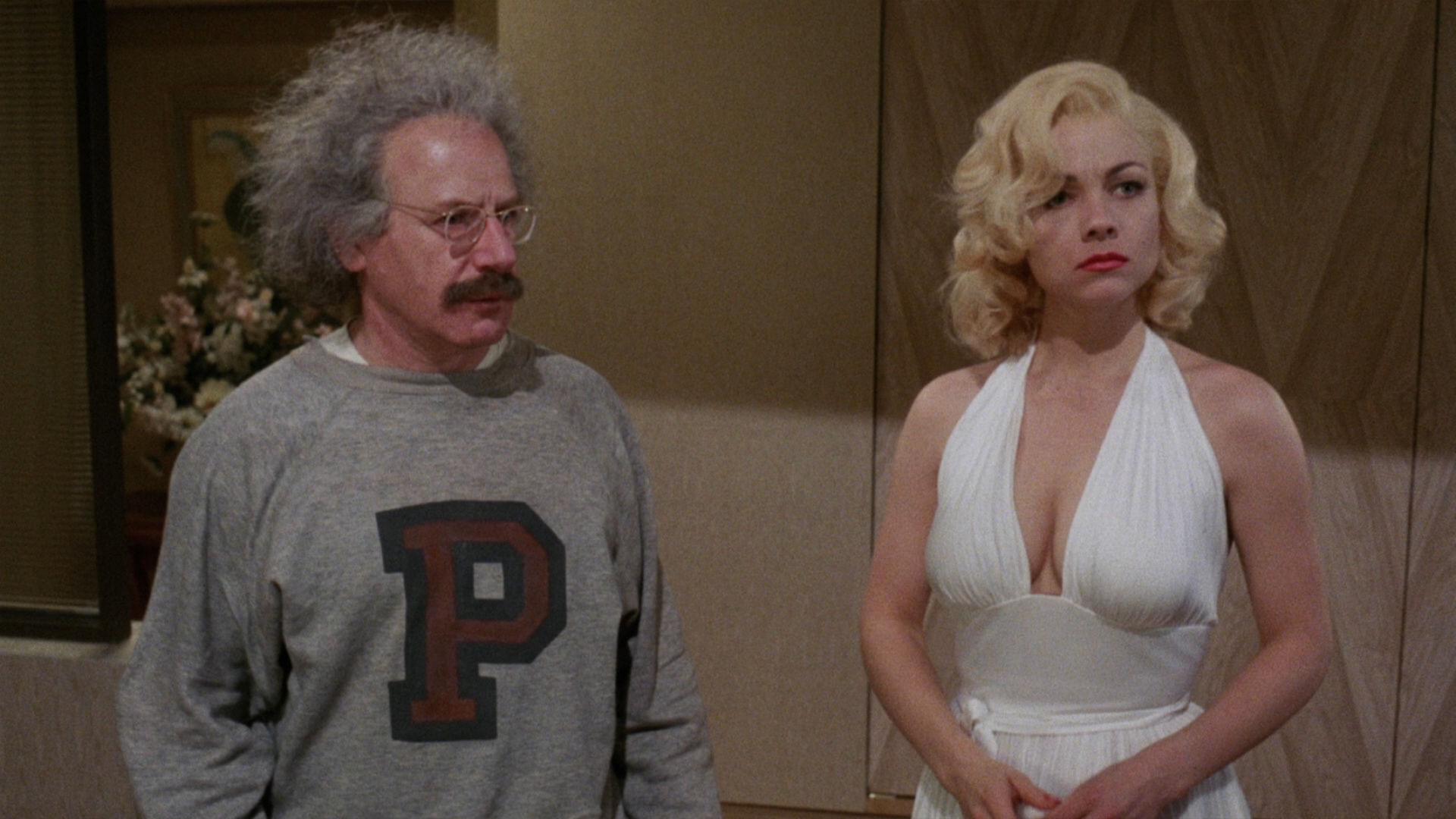
Four unnamed people who look and sound a lot like Albert Einstein, Marilyn Monroe, Joe DiMaggio, and Joseph McCarthy converge in one New York City hotel room in this compelling, visually inventive adaptation of Terry Johnson’s play, from director Nicolas Roeg.


Ralph Meeker stars as snarling private dick Mike Hammer, whose decision one dark, lonely night to pick up a hitchhiking woman sends him down some terrifying byways. Brazen and bleak, Kiss Me Deadly is a film noir masterwork as well as an essential piece of cold war paranoia, and it features as nervy an ending as has ever been seen in American cinema.


 A brash and precocious ten-year-old (Catherine Demongeot) comes to Paris for a whirlwind weekend with her rakish uncle (Philippe Noiret); he and the viewer get more than they bargained for, however, in this anarchic comedy from Louis Malle, which rides roughshod over the City of Light.


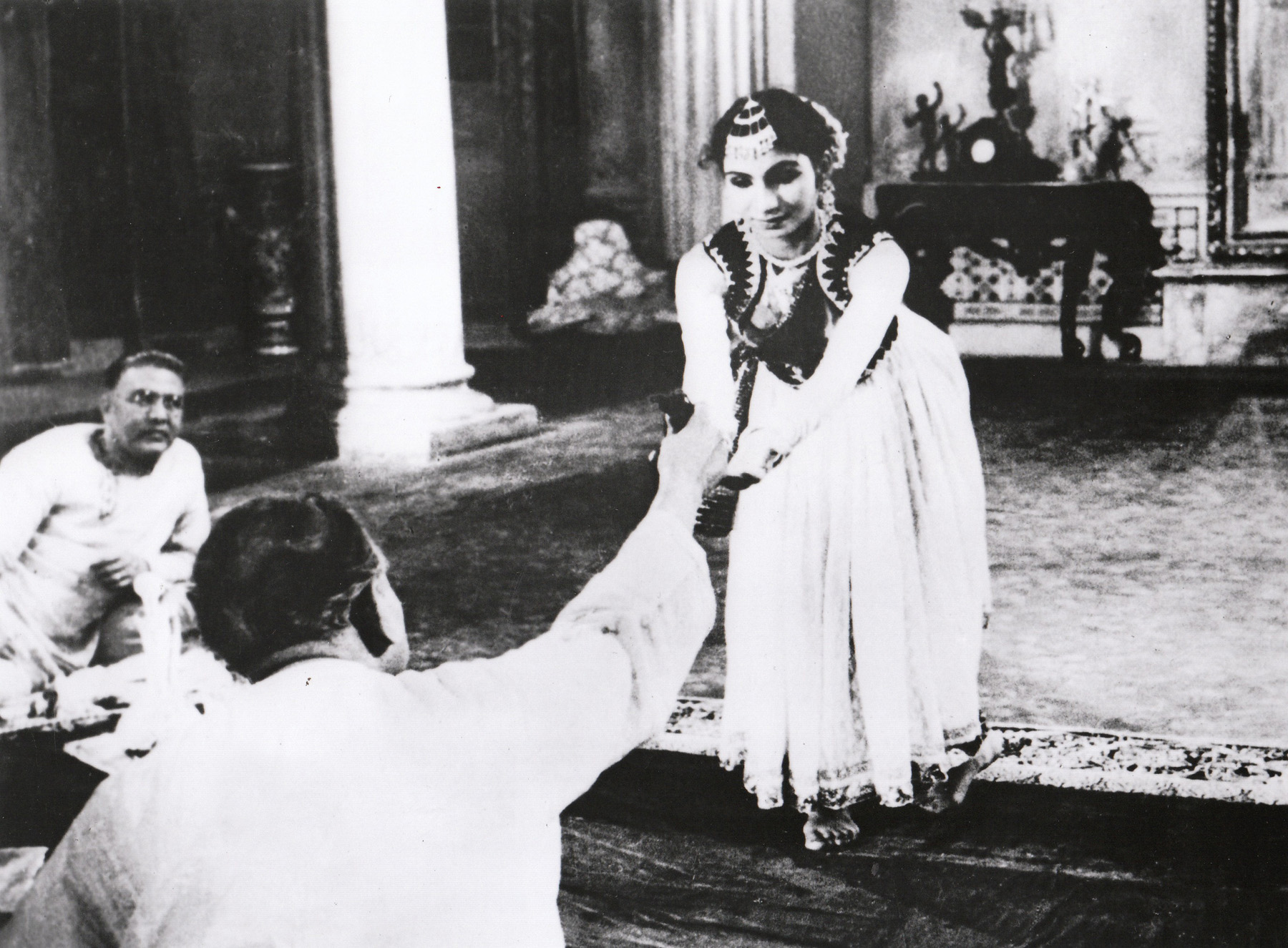
With The Music Room (Jalsaghar), Satyajit Ray brilliantly evokes the crumbling opulence of the world of a fallen aristocrat (the beloved actor Chhabi Biswas) desperately clinging to a fading way of life. His greatest joy is the music room in which he has hosted lavish concerts over the years—now a shadow of its former vivid self.


The last person to die on New Year’s Eve before the clock strikes twelve is doomed to take the reins of Death’s chariot and work tirelessly collecting fresh souls for the next year. So says the legend that drives The Phantom Carriage (Körkarlen), directed by the father of Swedish cinema, Victor Sjöström. 


This spectacular Technicolor epic, directed by Zoltán Korda, is considered the finest of the many adaptations of A.E.W. Mason’s classic 1902 adventure novel about the British Empire’s exploits in Africa, and a crowning achievement of Alexander Korda’s legendary production company, London Films.


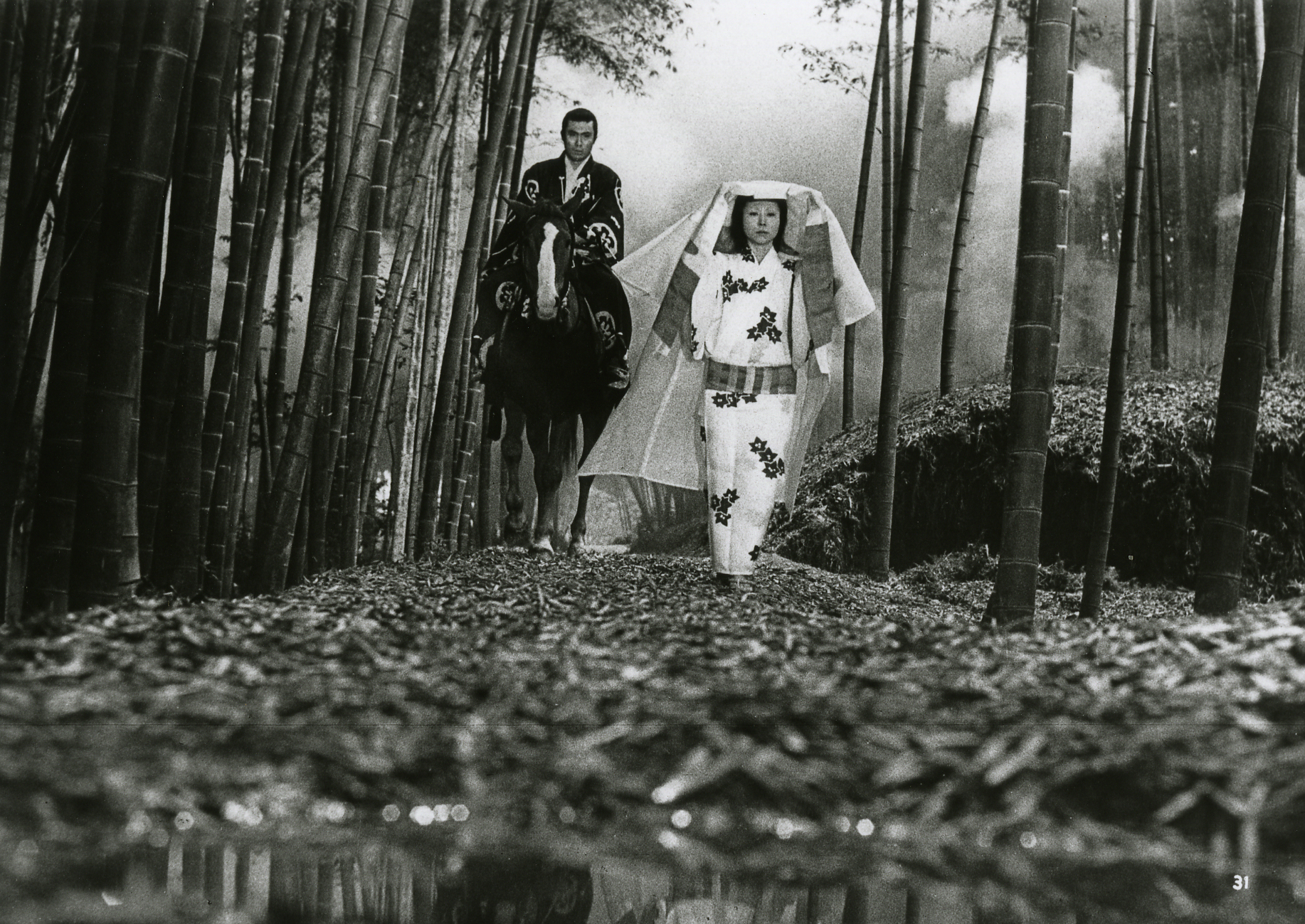
 In this poetic and atmospheric horror fable, set in a village in war-torn medieval Japan, a malevolent spirit has been ripping out the throats of itinerant samurai. When a military hero is sent to dispatch the unseen force, he finds that he must struggle with his own personal demons as well. 


This spellbinding anti-romance was a late-career coup for the legendary Italian filmmaker, and is renowned for its sexual explicitness and an extended scene on a fog- enshrouded highway that stands with the director’s greatest set pieces.


 A twisted treasure from Hollywood’s pre-Code horror heyday,Island of Lost Souls is a cautionary tale of science run amok adapted from H. G. Wells’s novel The Island of Dr. Moreau. Erle C. Kenton’s touchstone of movie terror is elegantly shot by Karl Struss, features groundbreaking makeup effects that inspired generations of monster-movie artists, and costars Bela Lugosi in one his most gruesome roles.


I'm going to be completely honest. Apart from Kuroneko, I've never heard of the other films. But these covers got me excited. Reading the synopsis left me feeling even more intrigued. I bought Hausu from Criterion and it should accompany Kuroneko really well (I sense a double feature coming up!). I've never seen an Indian or Bollywood film before, it's one of my many filmic blind spots, so I really want to see Satyajit Ray's The Music Room. Zazie Dans Le Metro looks really fun and I love anything set in Paris.


Covers and Synopsis from Criterion.com


LinkWithin

Related Posts Plugin for WordPress, Blogger...